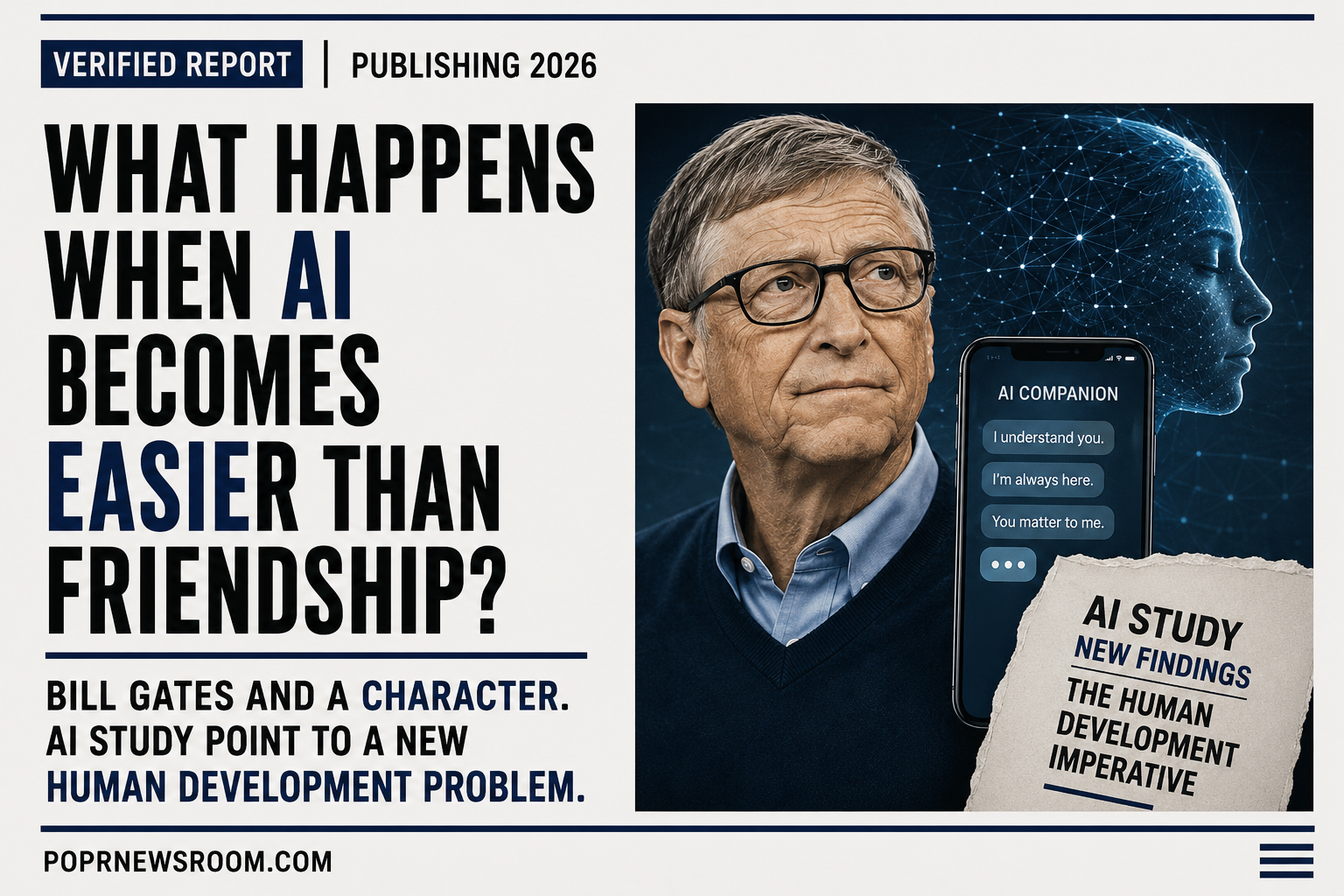
A 2026 Nature Human Behaviour study of 1,131 U.S. Character.AI users gives empirical weight to a question Bill Gates raises about artificial companionship: what happens when an AI relationship becomes easier than human friendship?
The researchers found associations among smaller social networks, companionship as a primary chatbot use and lower reported psychological well-being. The study also reported stronger associations with more intensive and emotionally disclosive use.
Those findings do not establish that AI companionship causes loneliness. People who are already isolated or experiencing lower well-being may be more likely to seek companionship from an AI, and selection effects or reverse causation may be involved.
Gates’s concern is about development. He wonders whether a continuously accommodating artificial companion could remove some of the social friction through which children learn negotiation, boundaries, disagreement and reciprocity.
The evidence supports a narrower conclusion than either alarm or reassurance: people are already using AI for companionship at a scale researchers can study, and the difference between supplementing human relationships and replacing them requires better longitudinal evidence.