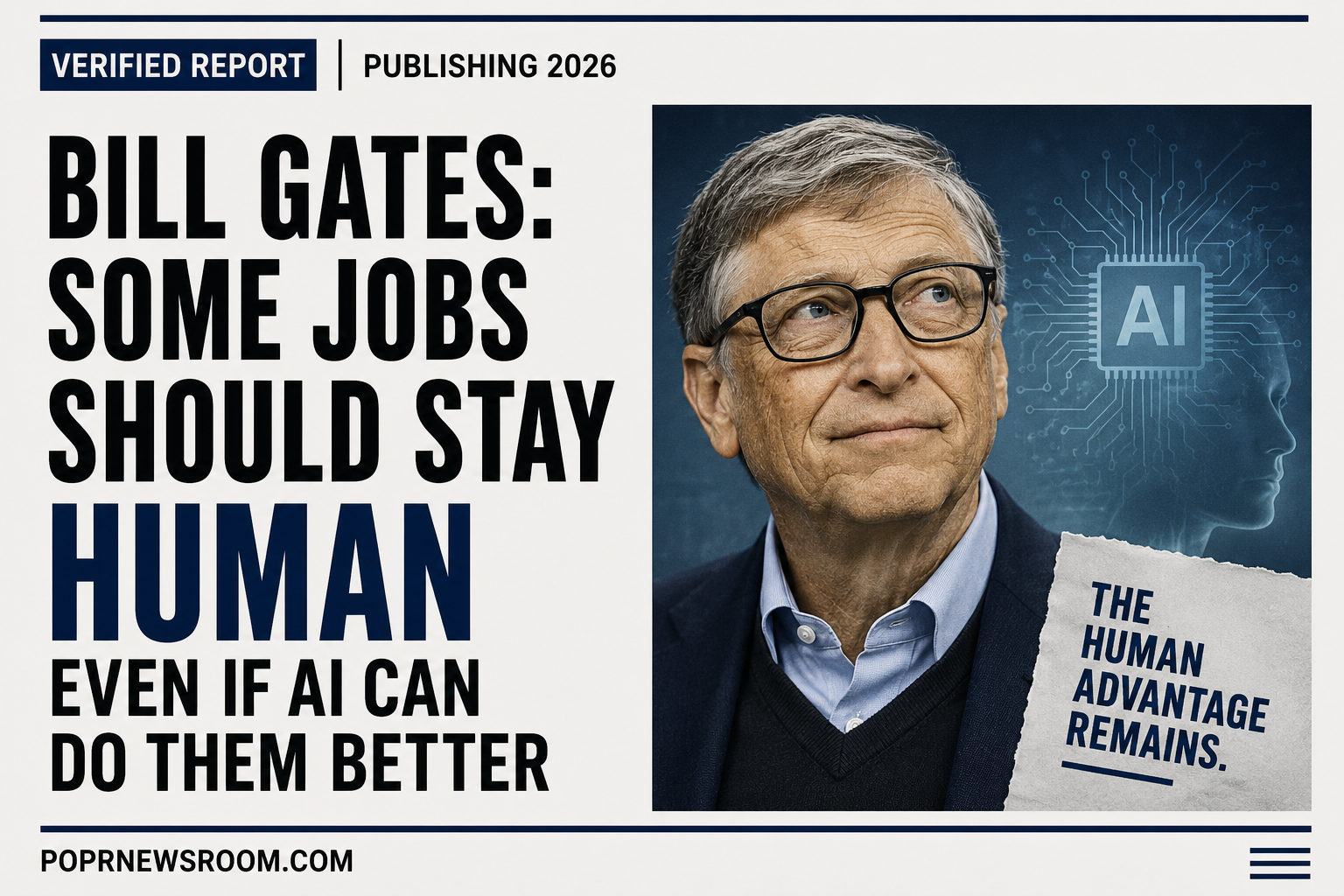
Bill Gates is asking societies to consider whether some work should remain human even if artificial intelligence can perform it better, faster or more cheaply. He calls the idea Human Reserved.
Gates uses caregiving and the delivery of devastating medical information to make the point. In those situations, technical accuracy is not the only value at stake. The presence of another person may itself be part of the service.
The proposal does not mean humans will always outperform AI, and it is not an enacted policy. Gates presents it as a question for societies deciding what efficiency should and should not replace.
His argument becomes more consequential as AI moves into work that depends on trust, judgment, emotional presence and relationships. A machine may eventually produce a convincing conversation or recommendation. That does not establish that every human role has become interchangeable with software.
Human Reserved therefore creates a boundary question for the AI era: when does preserving a human role protect something that cannot be measured only by speed, cost or technical performance?