EDITORIAL DISCLOSURE: This is promotional affiliate-supported editorial about an external product that POPR Technologies uses in its own production workflow. POPR is a paying Kling customer and referral participant. This report is not independent third-party validation, and our conclusions remain our own.
AFFILIATE DISCLOSURE: POPR Newsroom may earn a commission if you purchase, subscribe, or sign up through certain links in this article. Affiliate relationships do not determine which products we cover or our findings, ratings, comparisons, or editorial conclusions.
COMMERCIAL RELATIONSHIP DISCLOSURE: POPR is proud to use Kling and participate in its referral program. We are not claiming a formal Kling or Kuaishou partnership, sponsorship, endorsement or outside advertiser relationship. The promotional purpose is stated plainly rather than hidden.
Try Kling With POPR's Referral Code
Visit the official Kling AI site and use POPR's referral code: 7B7BDSZ8CDD5. The dated August 2026 POPR account terms stated that a qualifying new paid subscriber could receive a 10 percent first-month credit bonus, capped at 1,500 bonus credits, while POPR could receive Kling credits. Confirm the current offer before subscribing because prices, benefits and referral terms can change.
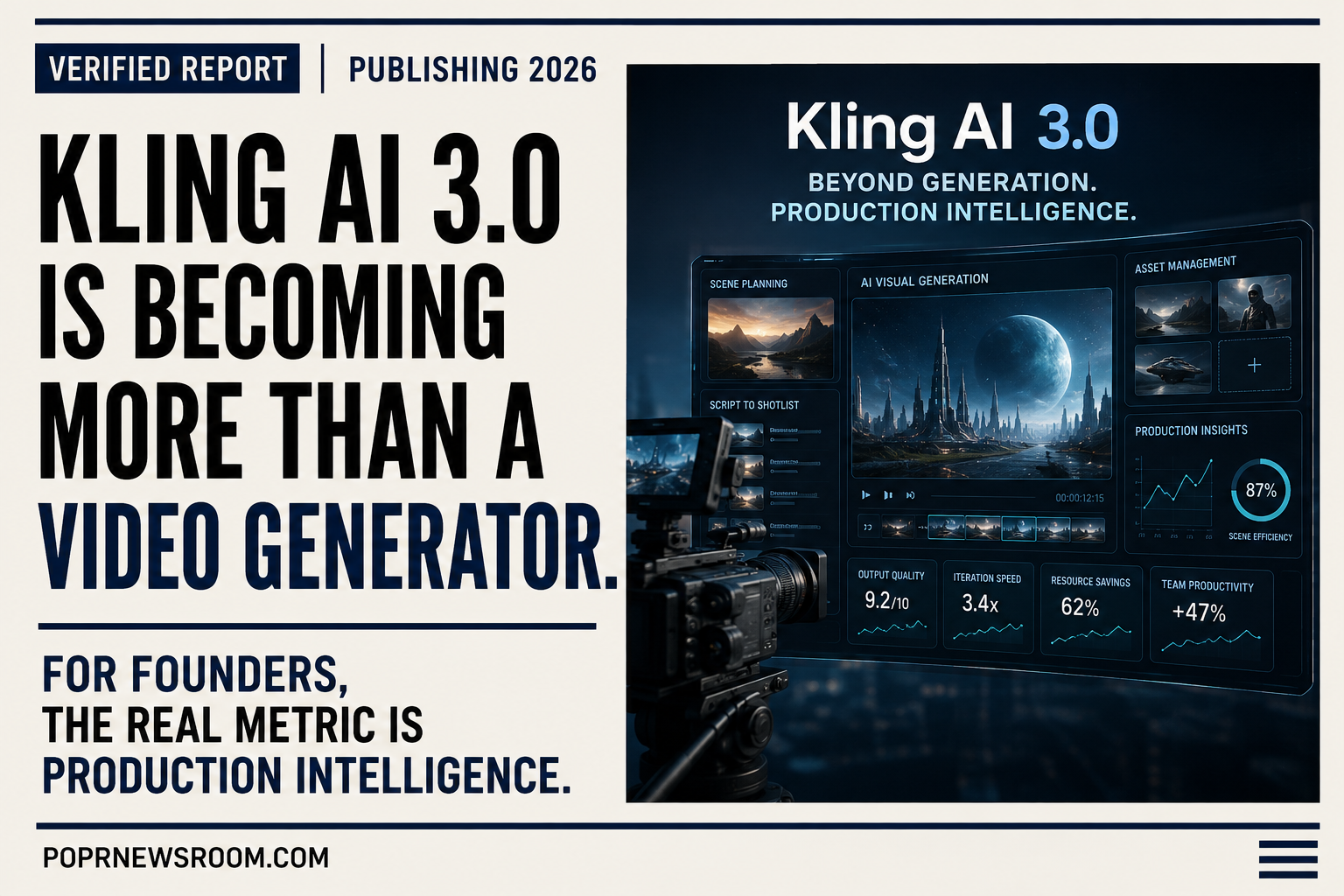
Kling 3.0 Omni is moving the AI-video conversation away from one impressive clip and toward the structure of a small production operation. Kuaishou's 3.0 family combines multimodal generation and editing with reference-driven characters, voice control, Multi-Shot direction, native audio, image workflows, native 4K and agent-oriented MCP and CLI tooling.
The reason POPR is paying attention is practical. We are using Kling inside the real Meta Tron World production workflow, where characters, scenes, motion, sound, editing and publication have to fit into a larger creative system. The site is an actual public example of the kind of cinematic work being built with Kling. It is not a claim that Kling autonomously created the universe or that every output is finished without human review.
Why Do Elements Matter?
The continuity problem in AI video is usually not whether one shot looks good. It is whether the same character, wardrobe, prop, voice and environment remain recognizable across the next ten shots. Kling's Elements system gives creators reusable references for characters, products, items, animals and other recurring subjects. Supported character Elements can include voice identity.
Kling documents multi-image and video Character Element workflows, and its current Omni guide states that workflows without video input can use up to seven images or Elements. Workflows with video input can use one video with total image or Element inputs capped at four. These limits are workflow-specific and can change.
POPR's experience is that this makes continuity manageable, not solved. The working hierarchy is canon character asset, clean reference Element, bound voice, shot prompt, camera direction, review and approved output. Generated video still needs retries and drift review.
Why Think in Beats Instead of “Make a Movie”?
Omni's Multi-Shot and Custom Multi-Shot modes let a creator specify duration, shot size, perspective, narrative content and camera movement shot by shot. That supports a director's workflow: establish the location, cut to a close-up, move into dialogue, track a subject or cross-cut between actions.
POPR's rule is to define each beat before rendering. State who is present, what stays fixed, what changes, who speaks, what sound exists, where the camera starts, how it moves and where the shot ends. A focused six-second test can be more useful than an unfocused 15-second request.
What Does Native Audio Cost?
Kling 3.0 supports native dialogue, ambience, sound effects and synchronized lip movement in supported workflows. The documented no-video-input rates are 6 credits per second for 720p without audio, 9 for 720p with audio, 8 for 1080p without audio and 12 for 1080p with audio.
A five-second 720p silent test therefore costs 30 credits. A 15-second 1080p native-audio generation costs 180 credits before retries. POPR uses native sound where it earns its place, but keeps exact captions, URLs, calls to action and typography in deterministic post-production. Our own testing found generated typography and text-to-speech underwhelming in the POPR workflow.
How Should a Small Creator Protect the Budget?
POPR's production doctrine is to lock the story and character reference first, test short shots at 720p, keep native audio off while debugging motion, and escalate only approved shots to higher resolution or audio. Native 4K is a finishing path, not a default iteration format.
Kling's paid-plan guide recorded Standard at $6.99 for the first subscription offer with 660 credits, Pro at $25.99 with 3,000 credits, Premier at $64.99 with 8,000 credits and Ultra at $127.99 with 26,000 credits. The same guide listed different renewal prices and warned that prices and benefits can change. These figures were not independently rechecked on September 14 and should be confirmed live before purchase.
What About MCP and CLI?
Kuaishou's second-quarter results and Kling's own materials describe MCP and CLI paths for compatible AI agents to organize batch generation, track tasks and retrieve results. This points toward a programmable production workflow rather than a web interface used one generation at a time.
POPR has not tested MCP or CLI. The existence of the feature is confirmed, but its reliability, failure rate, credit behavior and human-review requirements in a real POPR workflow remain unresolved. Automation can save repetitive setup or multiply waste if budget controls are absent.
Is This a Kling Partnership?
No formal partnership is established by this report. POPR is a paying Kling customer and referral participant. The referral code is a commercial relationship, not evidence that Kling sponsors POPR, endorses Meta Tron World or operates an official POPR studio.
That relationship is why this article uses a prominent affiliate disclosure and repeats the code near the relevant calls to action. POPR may benefit if a reader subscribes through the code. A qualifying reader may receive the stated first-month credit bonus if the live offer still applies. The relationship does not turn documented product claims into independent validation.
See the Actual Example and Try It
The real public example is Meta Tron World, where POPR is building a human-directed creative production lane around story, canon, character references, concept art, motion, native or external sound, editing and publication.
If you want to test the platform, visit Kling AI and enter POPR's referral code: 7B7BDSZ8CDD5. Check the current terms and membership panel at the time of sign-up. The code may provide a current first-month bonus for a qualifying new paid subscriber, and POPR may receive Kling credits.
Bottom Line
Kling 3.0 Omni is a strong candidate for a small creator who wants one platform to connect recurring identity, reference-driven scenes, shot-level direction, native audio, image work, higher-resolution finishing and possible agent orchestration. It is not a guarantee of perfect continuity, a complete movie from one prompt, or a low-cost final film without failed generations and human review.
POPR is using Kling in the Meta Tron World workflow and wants readers to try it. That makes this report promotional affiliate-supported editorial. The code is 7B7BDSZ8CDD5, the official destination is Kling AI, and the relationship is disclosed because readers should know who may benefit.
AFFILIATE DISCLOSURE: POPR Newsroom may earn a commission or platform credits if you subscribe through certain links or use the referral code in this report. Affiliate relationships do not determine our editorial conclusions. This report is not sponsored content, paid placement or a claim of a formal Kling partnership.