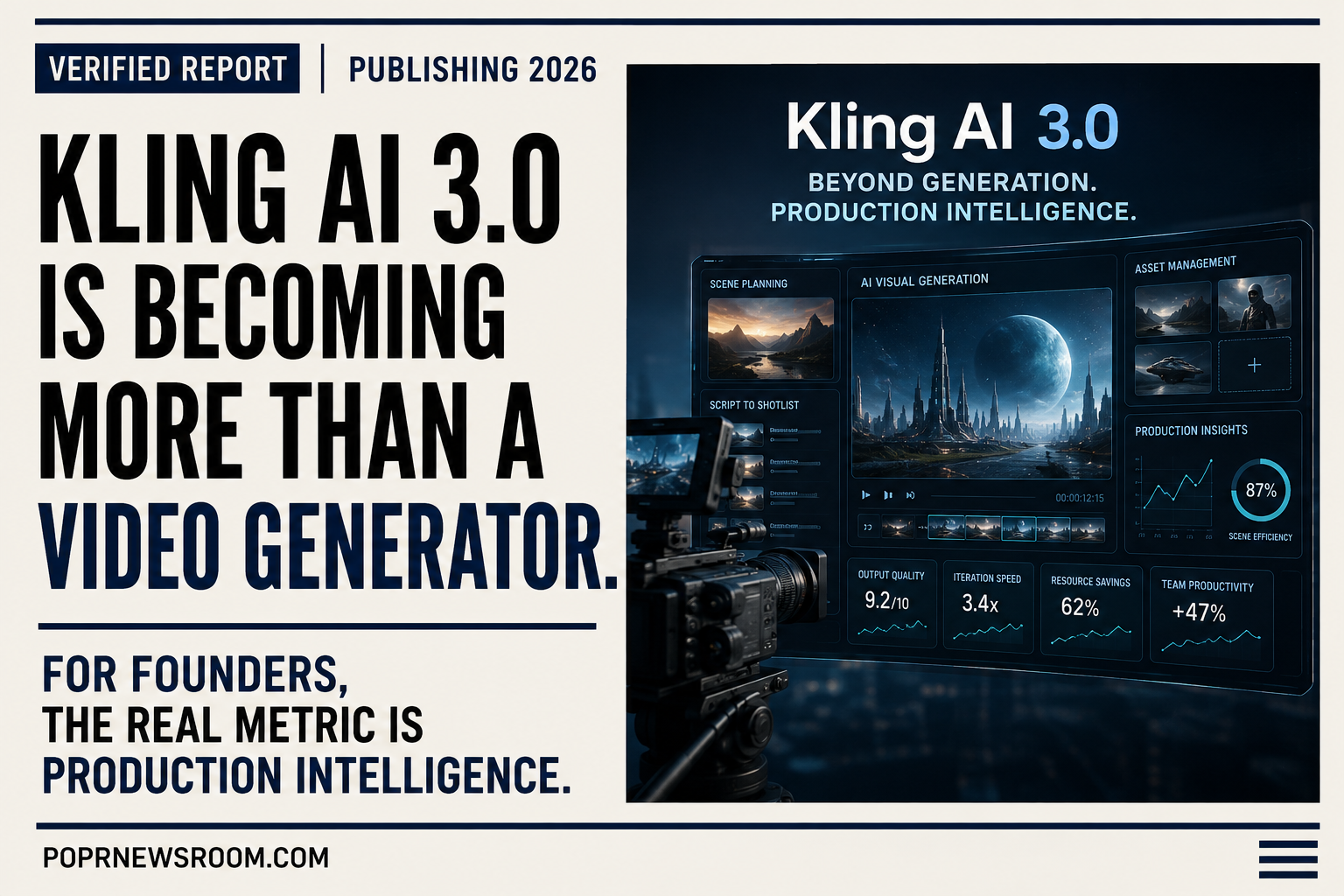
Kling AI’s latest development is not simply another improvement to generated video. Kuaishou has placed a speed-and-cost-oriented Turbo path, native 4K direct output, persistent reference workflows and official MCP and CLI tooling around Kling 3.0.
Those additions address different layers of production. Turbo targets creative efficiency and lower production cost. Native 4K targets professional output. Elements supports persistent characters, items and scenes. MCP and CLI are designed to let AI agents orchestrate Kling for batch content creation.
The combination points toward a shift from an isolated generation product to programmable video infrastructure. It does not prove that Kling’s orchestration features are production-ready. POPR has not yet tested MCP or CLI in a real automated workflow, so current reliability, failure rates, human intervention and usable-output rates remain unresolved.
Kling 3.0 itself supports multimodal text, image, audio and video workflows, generations up to 15 seconds and native multilingual audio. Kuaishou has also reported substantial platform scale, including more than 100 million users as of June 2026 according to CEO Cheng Yixiao’s August earnings-call remarks.
Disclosure: POPR Technologies uses Kling AI in its own production workflow and has a referral relationship with the platform. This Rapid News report contains no referral link or code. POPR is a paying customer and referral participant, not a claimed formal partner. Our editorial conclusions remain our own.
The practical founder question is therefore changing. The relevant comparison is not only which model creates the most impressive clip, but which system can preserve creative identity, make iteration economical, support exact finishing and eventually participate in a repeatable production operation.