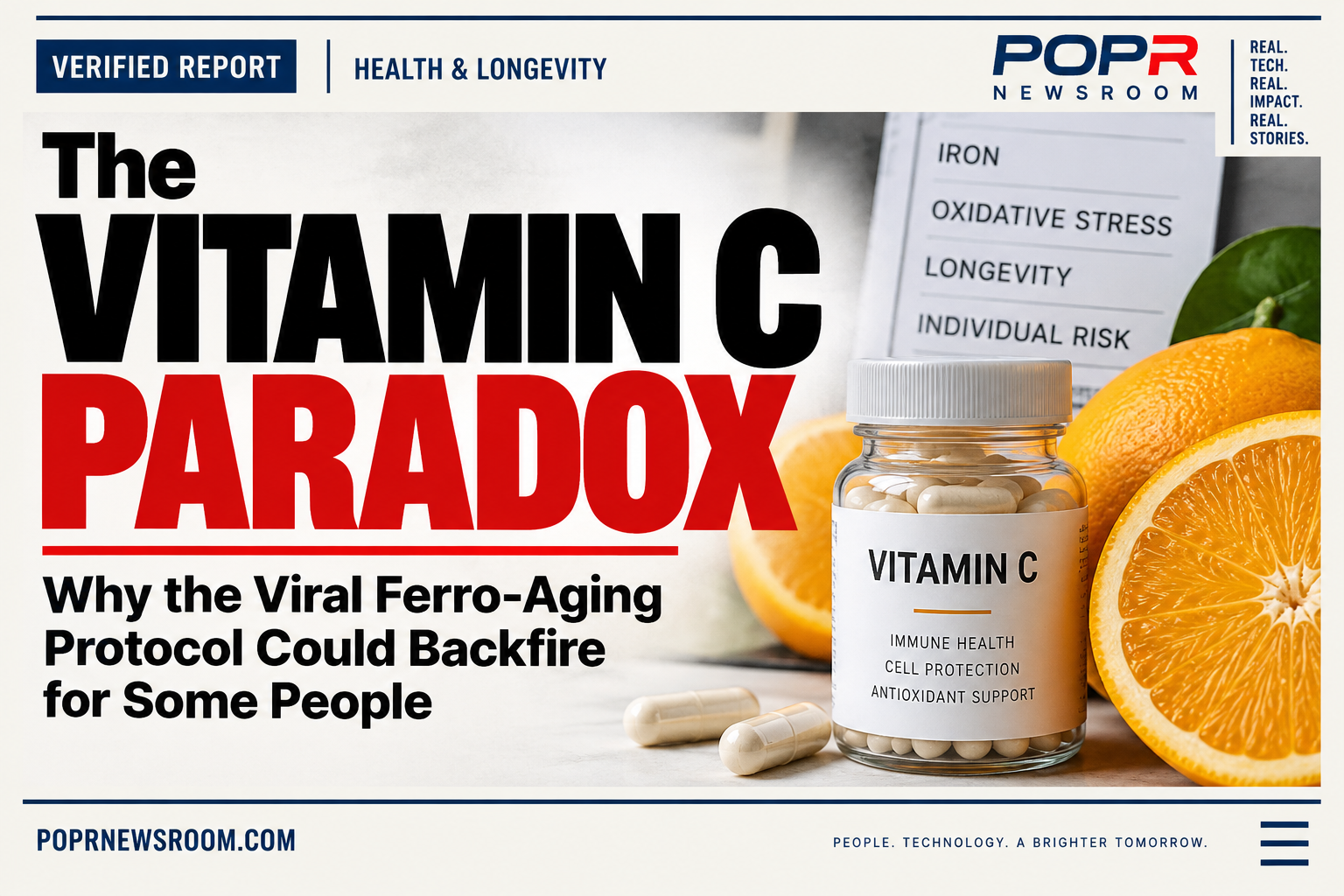
A 2026 Cell Metabolism study reported that long-term vitamin C treatment changed ferro-aging signatures in aged cynomolgus monkeys. The result makes ACSL4 an important research target, but it does not prove that vitamin C reverses human aging or establish a human longevity supplement protocol.
What did the study find?
Researchers reported that vitamin C inhibited ACSL4 in functional experiments and reduced ferro-aging signatures across tissues in aged monkeys treated for more than 40 months. The animals also showed reported improvements in neurological, metabolic and multi-organ measures.
The study used 12-to-16-year-old cynomolgus monkeys and administered 30 milligrams per kilogram per day through drinking water. A separate mouse experiment found that inhibiting hepatic ACSL4 through gene editing alleviated aging-related phenotypes.
Those findings are confirmed within the reported animal experiments. They do not establish a human dose or treatment.
What is ferro-aging?
Ferro-aging is a proposed chronic interaction among iron dysregulation, ACSL4 activity, vulnerable membrane lipids, lipid peroxidation, cellular senescence and tissue dysfunction.
It is not the same as saying “iron causes aging.” A September 2026 review described iron as a critical amplifier rather than a sole driver of aging. The broader model includes mitochondrial dysfunction, oxidative stress and related cell-stress pathways.
Does the study prove vitamin C reverses human aging?
No. The intervention took place in non-human primates. Human observations in the research provide context, but no randomized controlled human trial has shown that targeting ACSL4 with vitamin C slows meaningful human aging or improves clinical outcomes.
The monkey dose cannot be mechanically converted into a human supplement dose. Human absorption, metabolism, pharmacokinetics, timing and long-term safety remain unresolved.
Why is vitamin C a paradox?
Vitamin C may inhibit ACSL4 in the experimental ferro-aging pathway while also increasing absorption of non-heme iron. Those effects happen at different points in biology.
That matters for people with diagnosed iron-overload conditions. An animal aging experiment is not a substitute for individualized clinical guidance, and there is no evidence here that people should begin high-dose vitamin C or an iron-removal protocol.
What is the important research question now?
The important question is whether the ACSL4 and ferro-aging pathway changes human aging in a safe and clinically meaningful way.
The current evidence supports a plausible emerging aging paradigm and a candidate research target. It does not establish a diagnostic test, a supplement protocol or a treatment for healthy aging.
The strongest takeaway is simple: the monkey result is scientifically interesting, but the human protocol has not been written.