Meta Is Dope commissioned POPR Technologies to produce the live Algorithmic Transmutation Engine, a browser-local transmutation NFT art tool that turns an uploaded image into five source-coupled treatments. It gives artists a way to add a new visual element to AI art, MidJourney images, conventional artwork, photography, or other inputs, then exports the selected result as a PNG or a five-second WebM capture.
The five modes are Flow Cartography, Reaction Field, Crystal Genesis, Clifford Resonance and Topographic. Each uses a different established computational technique, so the same upload can become streamline linework, reaction-diffusion texture, a Voronoi mosaic, an attractor raster, or layered contours.
The partnership’s central distinction is source coupling. The commissioned tool is not presented as one fixed art filter that paints the same effect over every upload. The selected renderer reads different properties of the source image and routes them into its own pipeline, giving an artist a way to set the work apart while preserving the underlying source.
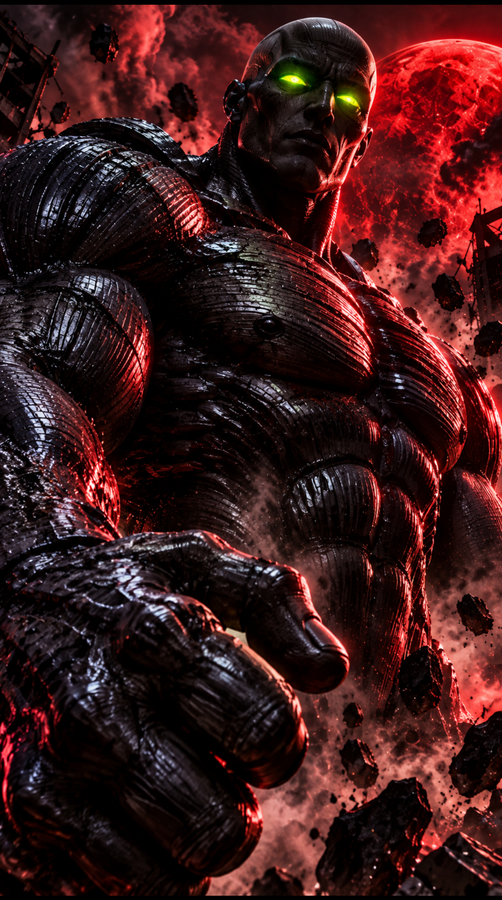
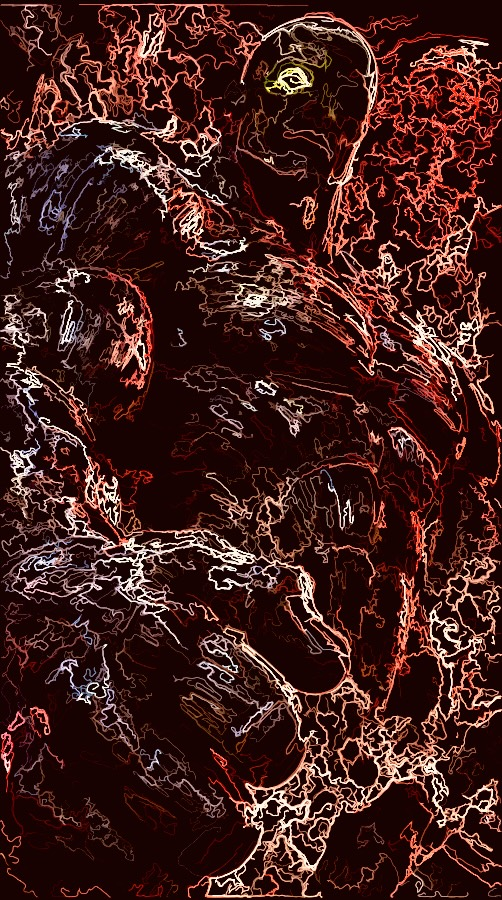
Confirmed current behavior is browser-local. The inspected feature uses browser image APIs, Canvas 2D, typed arrays and ordinary JavaScript or TypeScript computation. It does not use a server image-upload path, WebGL, WebGPU, worker or external numerical library for the five renderers.
The product description needs one technical boundary. The mathematical families are established techniques, including Sobel filtering, Gray-Scott reaction-diffusion, Voronoi assignment, the Clifford map and Marching Squares. The defensible POPR-specific claim is the implementation combination and source-image workflow, not a claim that POPR invented those mathematical fields.
The output behavior also differs by mode. Flow Cartography, Reaction Field and Crystal Genesis use unseeded browser randomness, so repeated runs can vary. Clifford Resonance and Topographic are deterministic for the same rasterized source and configuration in the ordinary browser execution model.
The five-second WebM export is a static capture of the already-rendered canvas. It does not rerun the algorithm or animate the parameters during recording. That makes the PNG the direct image export and the WebM a short presentation wrapper around the finished result.
Disclosure: Meta Is Dope commissioned POPR Technologies to produce the Algorithmic Transmutation Engine as a transmutation NFT art tool for artists. POPR Newsroom is a publication of POPR Technologies Inc. This Rapid News report covers the affiliated Meta Is Dope and POPR Technologies partnership. It contains no affiliate link, paid placement, or sponsored recommendation.