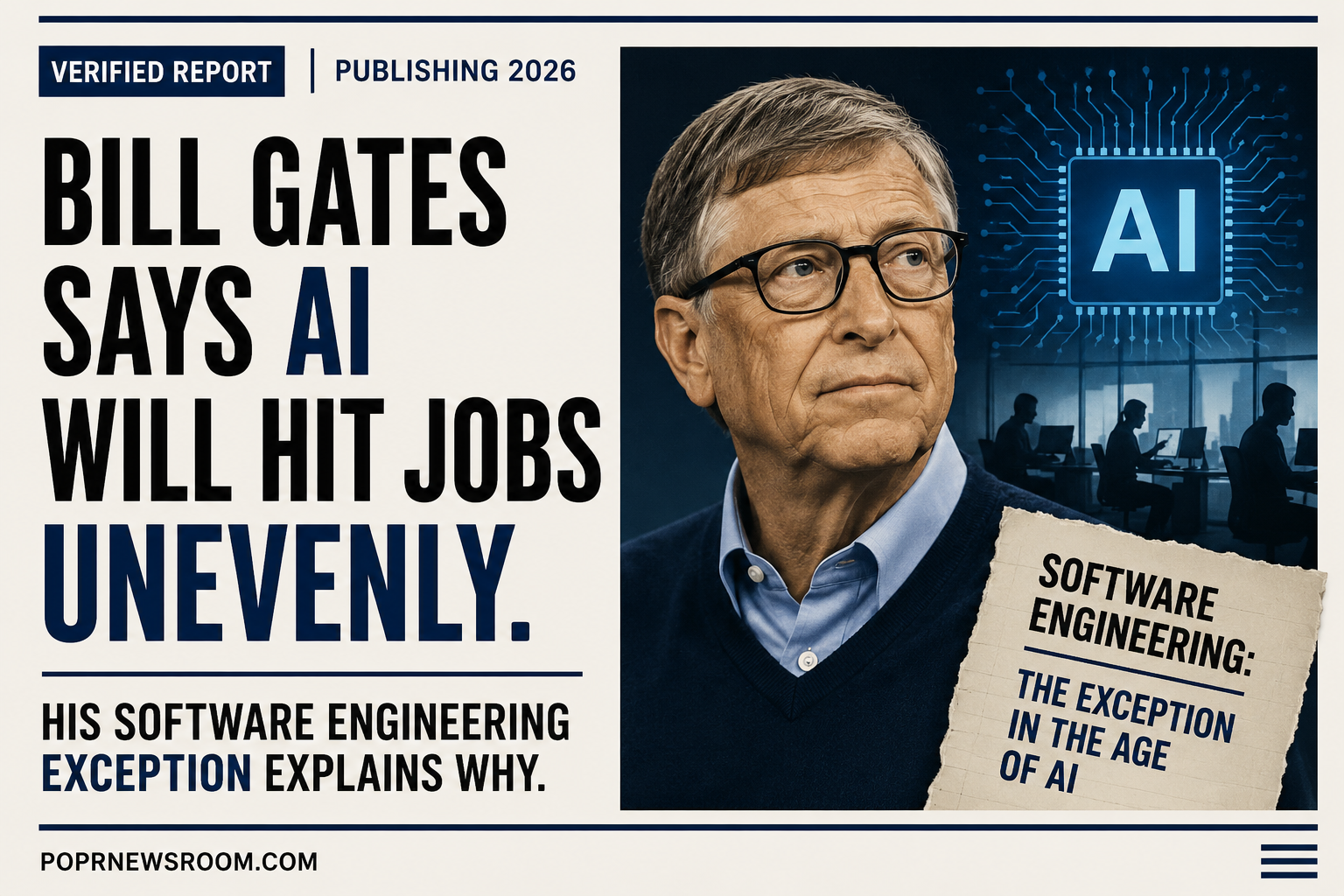
Bill Gates expects artificial intelligence to put pressure on several kinds of work, including customer support, paralegal work, loan assessment, data analysis, medical triage and software engineering. But he says software engineering may experience less net job loss if cheaper development creates enough new demand.
That is a forecast, not an established labor-market outcome. Gates’s point is that AI can automate tasks while also lowering the cost of producing software, making projects that were once too expensive newly viable.
The distinction separates task exposure from job elimination. An occupation can become more productive, change its mix of junior and senior work, and still grow if demand expands. It can also shrink if lower costs do not create enough new work.
Emerging Stanford Digital Economy Lab research has added pressure to the entry-level question by reporting employment effects among workers in occupations more exposed to AI. The broader interpretation remains contested, and the evidence does not establish a generalized job apocalypse.
Gates’s software-engineering exception is therefore conditional. If design and other higher-level tasks remain valuable and lower costs create sufficient demand, the field could produce more software with a changing workforce. The harder question is who gets the opportunity to become experienced when AI automates some of the work traditionally assigned to beginners.