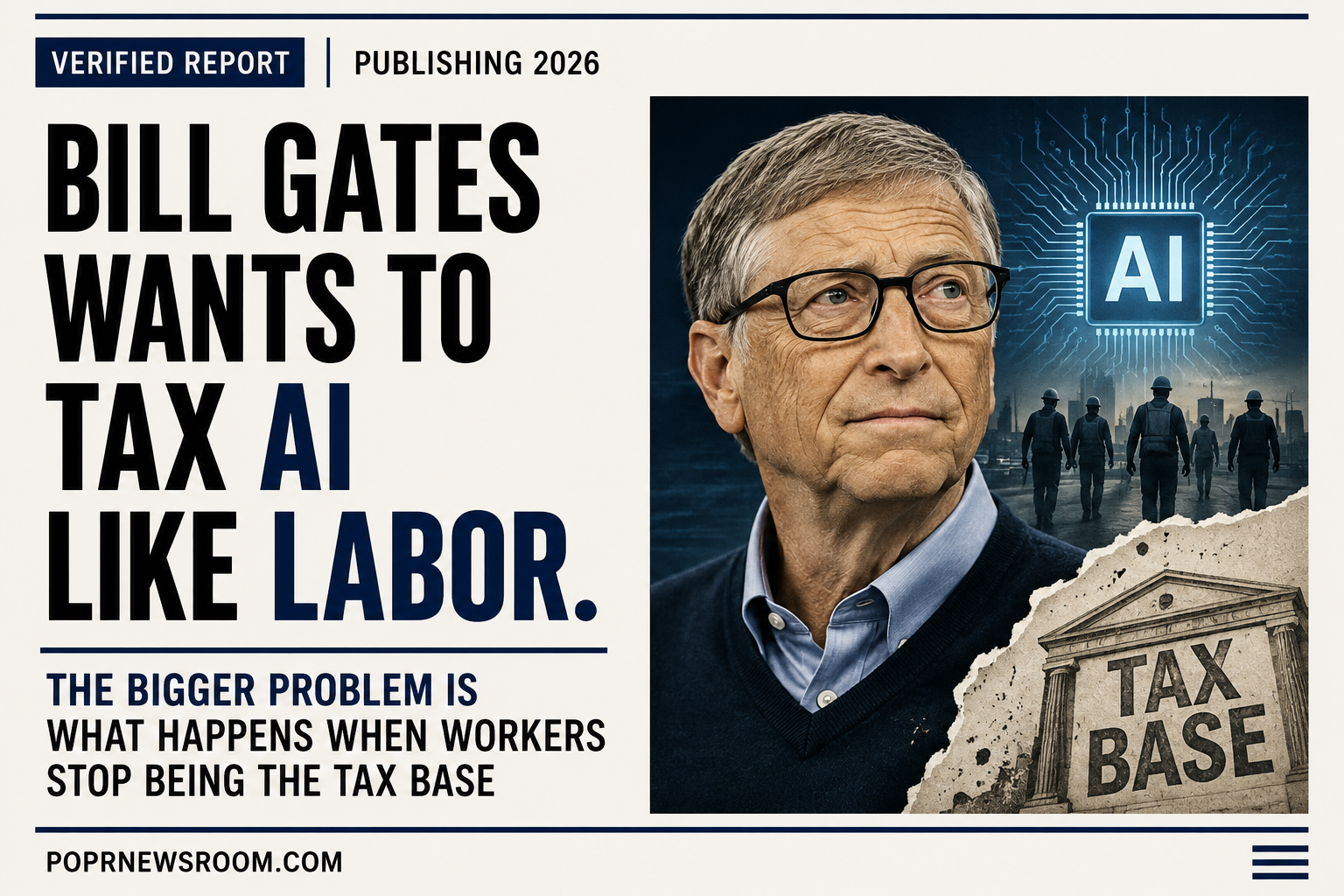
Bill Gates’s robot-tax proposal is not new. He has said he proposed one years ago. The AI era gives that old argument a larger fiscal question: what happens to public revenue if productive value increasingly comes from systems that do not receive ordinary wages?
A robot would not literally file a personal income-tax return. Any policy would have to decide whether to tax company profits, automation-related capital, AI output, reduced payroll or some other measure of economic activity.
The policy problem is not proof that AI will eliminate a specific share of jobs. The future scale and distribution of labor displacement remain uncertain. The issue is whether a tax system built heavily around human wages can remain stable if the economy produces more value with fewer workers.
Gates’s answer is a rebalancing between taxes on labor and taxes associated with automation. That is a policy proposal, not enacted law, and it could create tradeoffs of its own if designed in a way that discourages useful investment.
The deeper question is who owns the productivity AI creates and how much of that value returns to the public systems that support the economy.